Making graph algorithms fast and scalable on traditional architectures and GPUs often involves breaking them into large, coarse-grained computational blocks that access similar regions of memory. We show that graph algorithms, which have tremendous vertex- and edge-level parallelism, can be scaled as fine-grained programs on suitable architectures. Specifically, we investigate graph algorithms on the UpDown architecture and show how this many-threaded, cache-less architecture enables simple, fine-grained parallel graph algorithms to be both fast and scalable. Single-node UpDown performance is 28x (geomean) over an H200 GPU, and that same program scales to 1000’s of nodes. We evaluate the system three ways: simulation, analytical projection models, and selected validation studies at scale (simulation of 16,384 UpDown nodes, using 256 supercomputer nodes). These results show the UpDown system can achieve 680K giga-traversed edges per second (GTEPS) for PageRank and 989K GTEPS BFS, exceeding prior results significantly. The realism of UpDown models has been validated by commercial activity at Chicago UpDown Computing (www.chupdown.com).
Beyond performance, the insights for programming are significant. Our measurements suggest that not only is programming difficult – for distributed memory and GPU-SIMT – it is unproductive. That is, the resulting programs are not performant. for example, we have measured up to 5x higher total memory traffic for GPU implementations compared with UpDown. And the trend is for increasing UpDown advantage as algorithms grow in complexity suggest that kernel and linear algebra library based approaches face significant challenges.
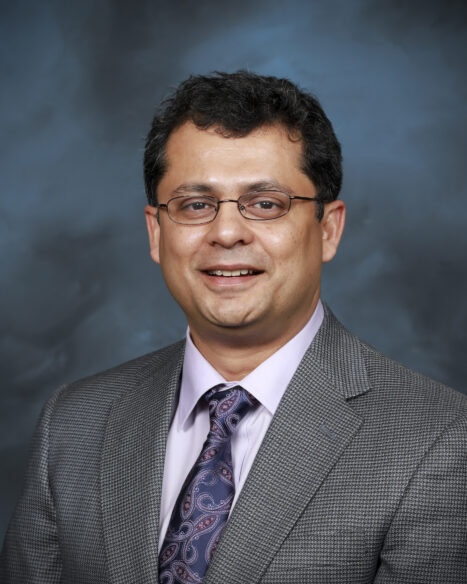
Andrew A. Chien is the William Eckhardt Distinguished Service Professor of Computer Science at the University of Chicago, Director of the CERES Center for Unstoppable Computing, and Senior Computer Scientist at Argonne National Laboratory. His research spans parallel computing, computer architecture, graph processing, cloud systems, and sustainable computing. He leads research on the UpDown Graph Supercomputer, exploring fine-grained parallelism for scalable graph applications. Previously, he served as Vice President of Research at Intel Corporation (2005–2010) and Editor-in-Chief of Communications of the ACM (2017–2022). He is a Fellow of ACM, IEEE, and AAAS, and holds degrees from the Massachusetts Institute of Technology.
Agent-based simulations of population health model each individual's movement and contacts over time. At national scale this produces a dynamic, highly irregular graph: hourly contact networks whose size swings from millions of edges at night to tens of billions during the day, with heavy skew toward dense urban locations. Storing these networks explicitly is impractical and partitioning them by agent or location count leaves severe load imbalance. This talk presents ENABLE, a hybrid CPU-GPU framework developed to address these problems. GPUs generate each hour's contact network directly from activity schedules, and a GPU implementation of Uniform Cost Partitioning balances contact edges across ranks, while CPUs run the disease dynamics in an asynchronous pipeline. For a 350-million-agent population, generating edges on the GPU instead of storing them reduces memory per simulated hour from about 250 GB to 1.3 GB. On the Frontier supercomputer, ENABLE reaches 82% strong-scaling efficiency at 1,120 ranks and holds weak-scaling efficiency above 75% on up to 1,200 GPUs. Roofline analysis shows both partitioning kernels are memory-bandwidth bound, each using about 78% of peak HBM bandwidth on the MI250X. The talk closes with open problems in streaming mobility data, keeping results deterministic across rank counts and scaling dynamic-graph simulations toward virtual population health twins.
Sudip Seal is a Distinguished Scientist and Group Leader of the Systems and Decision Sciences Group in the Computer Science and Mathematics Division at Oak Ridge National Laboratory. He also holds a Joint ORNL-UTK Faculty in the Department of Electrical Engineering and Computer Science at the University of Tennessee, Knoxville. He leads ORNL's cross-cutting AI Initiative and FORESEE (Foundational Research for Smart Extreme-scale Ecosystems), a core Laboratory Directed Research and Development initiative. His research covers scalable algorithms for extreme-scale scientific computing and AI/ML workloads, architecture-aware parallel algorithms, data-intensive computing, extreme-scale parallel simulation and energy-aware computing. He holds PhDs in computer engineering and in theoretical high-energy physics. He is also an Associate Editor of the Journal of Parallel and Distributed Computing.
Drag and Drop Website Builder